



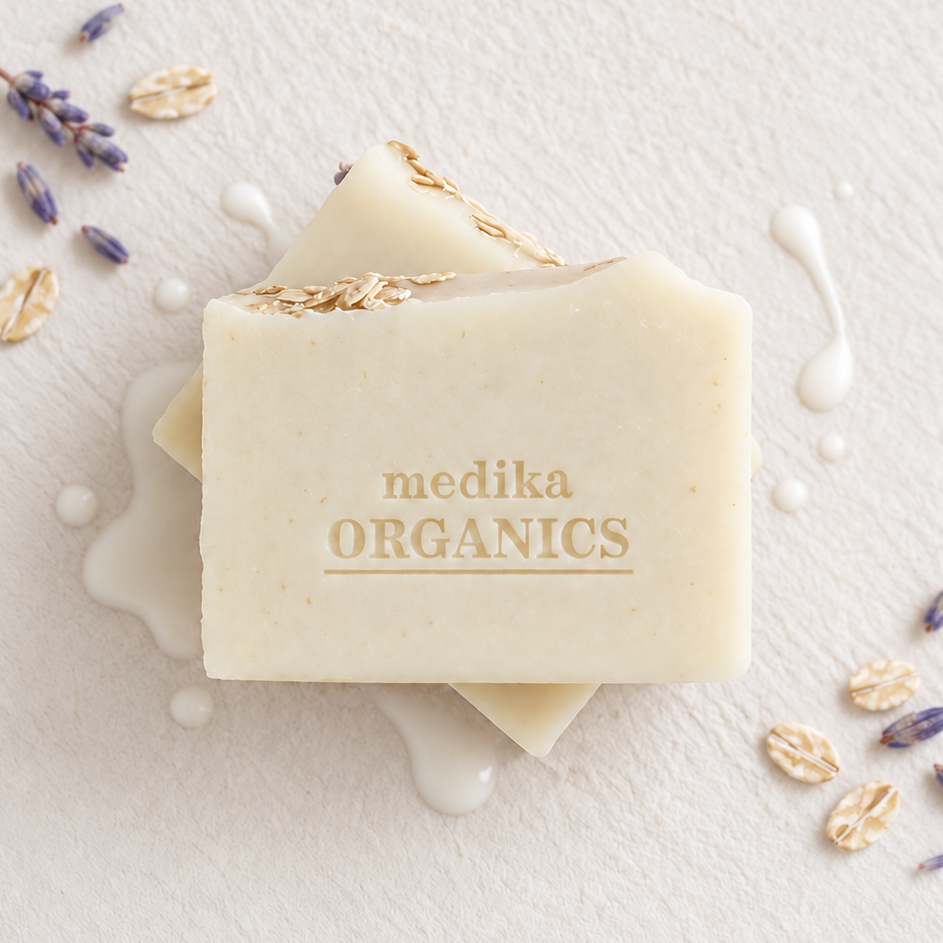
Most soap sold as "natural" in Australia has no legal obligation to prove that claim. The word carries no regulated definition under Australian consumer law for personal care products. What it carries, instead, is marketing power. The result is shelves and online stores routinely stocking bars with botanical photography on the outside and sodium lauryl sulfate on the inside. For anyone with sensitive or reactive skin, that gap between label and formula is a reaction waiting to happen. If you've been searching for natural soaps in Australia and found the options overwhelming, you're not alone.
This is a practical guide for making sense of that confusion. It covers what "natural" actually means in soap chemistry, how to match a bar to your skin type, which ingredients are worth seeking and which to leave behind, and how to find genuinely natural, Australian-made soap you can trust. Small-batch makers like Medika Organics have built ingredient transparency into how they operate from the start, and that approach is a useful benchmark for everything that follows.
No fads, no overlong ingredient glossaries. Just a clear, honest lens for making a better purchase, one that works for your skin, your values, and the Australian climate.
What "natural" on a soap label actually means
The Australian Consumer Law requires that claims not be misleading or deceptive, but it does not define "natural" for cosmetics. A brand can use the word freely, provided it can defend the impression created in a reasonable consumer's mind. In practice, that standard is low enough that it rarely stops anyone. So when you see "natural", "botanical", "gentle" or "plant-based" on the front of a bar, none of those words guarantee anything specific about what is actually inside.
A genuinely natural soap is better defined by what it is made from and how it is made, not by its front label. The most relevant variables are the base oils used, the soap-making process, and the absence of synthetic additives. Once you understand those, reading a label becomes straightforward.
The "cold-process" difference
Cold-process soap is made by combining raw plant oils with sodium hydroxide, which triggers saponification: a chemical reaction that converts oils and water into soap and glycerin. No external heat is applied after mixing, which preserves the glycerin produced naturally during the reaction. Glycerin is a humectant; it draws moisture to the skin surface and reduces that tight, stripped feeling after washing.
Many commercial soap manufacturers extract and sell that glycerin separately, leaving the bar more drying. Cold-process bars keep it in, typically retaining around 5 to 10 percent glycerin by weight, a meaningful difference for skin comfort over time.
Terms that are mostly marketing
"Unscented" can still contain masking fragrance added to neutralise a chemical smell.
"Plant-based" does not exclude synthetic detergents, preservatives, or dyes. The front label is designed to sell; the ingredient list is where the actual formulation lives. Get into the habit of going straight there, reading from the first ingredient to the last.
Best natural soaps in Australia for different skin types
The three most common formulations you will encounter are cold-process, triple-milled, and castile, and each has a different relationship with your skin.
The most suitable bars for dry or sensitive skin are fragrance-free, made via cold-process to retain glycerin, and superfatted with conditioning oils such as olive, avocado, shea butter, or goat milk.
Triple-milled bars can also work well for sensitive skin if they are shea butter-rich and vegetable-oil based, though the milling process does remove some glycerin, so the ingredient formula matters more than the process label.
Pure castile bars (which are made from 100% olive oil) are mild but tend to lather poorly and can feel slimy; they are a reasonable option for those who want an extremely simple formula. For eczema-prone or reactive skin, the safest starting point is always an unscented bar with a short ingredient list.
Ingredients worth looking for, and a few to skip
You do not need a chemistry degree to read an ingredient list well. You need a short working list of what is useful, what is neutral, and what is worth avoiding. Here is a focused version.
Plant oils that genuinely nourish
The standout choice is saponified olive oil, the foundation of most gentle bars and suitable for almost every skin type, along with avocado oil and shea butter, both rich and deeply conditioning. Goat milk adds a creamier texture with a gentle conditioning quality, and botanical additions like colloidal oatmeal and calendula can calm reactive skin, though even these are worth patch-testing before committing.
Coconut oil produces a generous lather but is drying at high concentrations, so check where it sits in the ingredient list: if it's the very first ingredient listed, it is too dominant for most skin types and will dry the skin out.
Synthetic red flags in "natural" bars
The clearest ingredients to avoid are sodium lauryl sulfate and sodium laureth sulfate, both synthetic detergents that strip skin oils and worsen dryness. "Fragrance" or "parfum" on an ingredient list signals a complex chemical blend; the same applies to synthetic colour additives listed as CI numbers on Australian labels. Parabens and methylisothiazolinone are preservatives worth avoiding for reactive or allergy-prone skin.
What a genuinely natural Australian soap looks like
It helps to have a concrete example of what transparent, well-made soap actually looks like. Not a marketing description, but the real operational decisions: which process, which oils, how it is scented and coloured, and how ingredients are disclosed to the customer.
Small-batch cold-process and ingredient transparency
Medika Organics handcrafts every bar in small batches using the traditional cold-process method. The base is organic oils and butters. Scenting is done with pure essential oils only rather than synthetic fragrance blends. Colour comes from clays, herbs, and botanicals, with no synthetic dyes or micas. Every product carries full ingredient transparency, that combination of process, ingredients, and honest disclosure is a practical benchmark for what genuinely natural, Australian-made handmade soap should actually mean.
The Medika Organics range covers artisan soap, dish soap, body care, and hair care. For anyone unsure where to begin, the unscented or sensitive-focused bars are the most accessible entry point.
Soap care, eco packaging, and buying online
Choosing the right bar is half the decision. The other half is knowing what to expect when you buy online and how to look after the bar once it arrives.
How to store your bar and get the most from it
A cold-process bar needs to stay dry between uses. A slatted or wire rack soap dish with good drainage, positioned outside the direct shower spray, is the simplest solution. Water pooling underneath the bar shortens its life. Let the bar dry fully between washes. A well-stored cold-process artisan soap bar will last up to four weeks, although actual longevity depends on formulation, bar size, and how frequently it is used.
Price expectations and what to check before you buy
Premium artisan cold-process bars in Australia typically fall in the $10 to $15 range per bar, though prices vary with size and brand. Shipping commonly starts around $8 to $11, with free delivery available above a minimum spend threshold. Before purchasing, check the returns policy: many natural soap sellers restrict returns on personal-care items for hygiene reasons, and some exclude change-of-mind returns entirely.
Where to find natural soaps in Australia: a simple buying checklist
Choosing a natural soap that genuinely suits your skin and values does not require hours of research. It requires a clearer lens applied consistently. Start with the soap-making process: cold-process bars retain the glycerin your skin benefits from, and that distinction matters more than any front-label claim. Read the ingredient list rather than the front label. If your skin is reactive, fragrance-free is not a preference but a practical filter to begin with, particularly if you are testing out a new soap brand. And when buying Australian-made, look for brands that list every ingredient clearly and can substantiate what "natural" means for their specific products.
This criteria will cut through most of the noise. Apply it to any bar you are considering, regardless of brand or price point, and you will make a better choice than most labels will steer you toward.
If you want a starting point that already meets all of those criteria, the Medika Organics range of natural soaps in Australia is a trustworthy place to begin. Browse the full collection today.


