

Animal fat and skincare sounds like a strange pairing, until you look at what your skin actually needs to stay healthy. A beef tallow moisturiser is one of the oldest forms of body care, and it's enjoying a very well-earned comeback in recent years as interest in traditional fats and their lipid profiles has grown. Many conventional moisturisers include synthetic emollients and humectants, They do a job, sure, but it's a different approach to supporting your skin than the fatty acid profile rendered grass-fed tallow provides.
In this blog I'll keep things simple and honest: what tallow actually is, what the science actually supports (and what it doesn't), which skin types tend to love it, and how to tell a well-made product from a poorly sourced one. If you've been curious about trying a tallow balm/cream, or you've got one sitting in the cupboard and you're not sure you're using it right... read on.
What a beef tallow moisturiser actually is
Beef tallow is the purified fat rendered from the suet around cattle organs, most often the kidneys. The fat is gently heated to separate the pure lipid from the connective tissue, then filtered until it's clean and shelf-stable. How stable it stays, and how much scent it keeps, comes down to the rendering method and how it's stored. Some tallow maintains a mild beefy smell unless it's refined further, which is handy to know when you're comparing products. The end result is a solid, creamy white fat that melts the moment it touches warm skin. That's the base of every tallow balm or tallow cream you'll find on the Australian market, including ours.
Animal fats were among the first moisturisers humans ever used, from traditional folk remedies to communities in the Andes using animal fat on wind-damaged skin. Tallow absorbed easily, protected against the elements, and needed no laboratory. The modern revival follows the same logic, just with better sourcing transparency and cleaner processing standards. What's really changed is that now you can check exactly what's in the jar.
The fatty acid profile and what the science actually supports
Grass-fed beef tallow is made up mostly of three fatty acids: oleic acid (around 38%), palmitic acid (about 27%) and stearic acid (roughly 17%). Oleic acid brings the softness and spreadability, which is why a good tallow cream glides into skin instead of sitting on top of it. Palmitic and stearic acids are the more occlusive ones; they create a protective layer that slows water loss and supports your skin barrier. Put it all together and the profile looks a lot like human sebum, which is a big part of why a beef tallow moisturiser is often described as a well-tolerated option for dry and sensitive skin.
Grass-fed versus grain-fed tallow
One little detail worth knowing is that grass-fed tallow tends to have a higher stearic acid content than grain-fed, which can make for a slightly firmer, more stable product. Whether that difference translates into a measurable skin benefit is less clear-cut, but sourcing still matters for overall quality and consistency. It's one of the reasons I'm fussy about sourcing the tallow that goes into our Whipped Tallow Face Cream.
What the evidence genuinely supports
There are no high quality clinical trials proving that tallow treats eczema, psoriasis or any inflammatory skin condition at a therapeutic level. What the evidence does support is more modest but still lovely: tallow works as an effective occlusive emollient for dry skin. That's a real benefit, and it's very different from a cure. If a product promises to "heal" eczema or reverse a skin condition, it's worth being sceptical.
Skin types that respond best (and one that should be cautious)
Dry skin benefits most from tallow's occlusive properties, which help trap moisture in skin that struggles to retain it on its own. Mature skin responds well because lipid production naturally slows with age, and tallow provides a fat profile that supports barrier function without relying on synthetic emollients.
Dermatology guidance is clear on one point: tallow is not recommended for acne-prone or oily skin. Its occlusive nature can contribute to clogged pores and congestion, particularly on the face. The jaw and chin are especially vulnerable areas when heavier occlusive products are applied. If your skin leans oily, produces excess sebum, or is prone to breakouts, a patch test is non-negotiable before applying any tallow balm to the face.
Formulation differences: whipped, blended and straight tallow
A straight tallow balm is dense, highly occlusive and brilliant for very dry or cracked skin: elbows, heels, and hands that cop a battering all day. Whipped tallow balm is the same base fat, just aerated into a lighter texture, so it spreads more easily and feels less heavy. The difference is sensory; same ingredient, friendlier application.
Blended formulas that combine tallow with jojoba, argan or olive oil take the occlusive weight down another notch. For the face, a whipped or lightly blended tallow product is usually the better starting point than a pure solid balm. For the body, especially dry patches, a denser formula works a treat applied to slightly damp skin after a shower. Let the format match the skin area and what your skin actually needs.
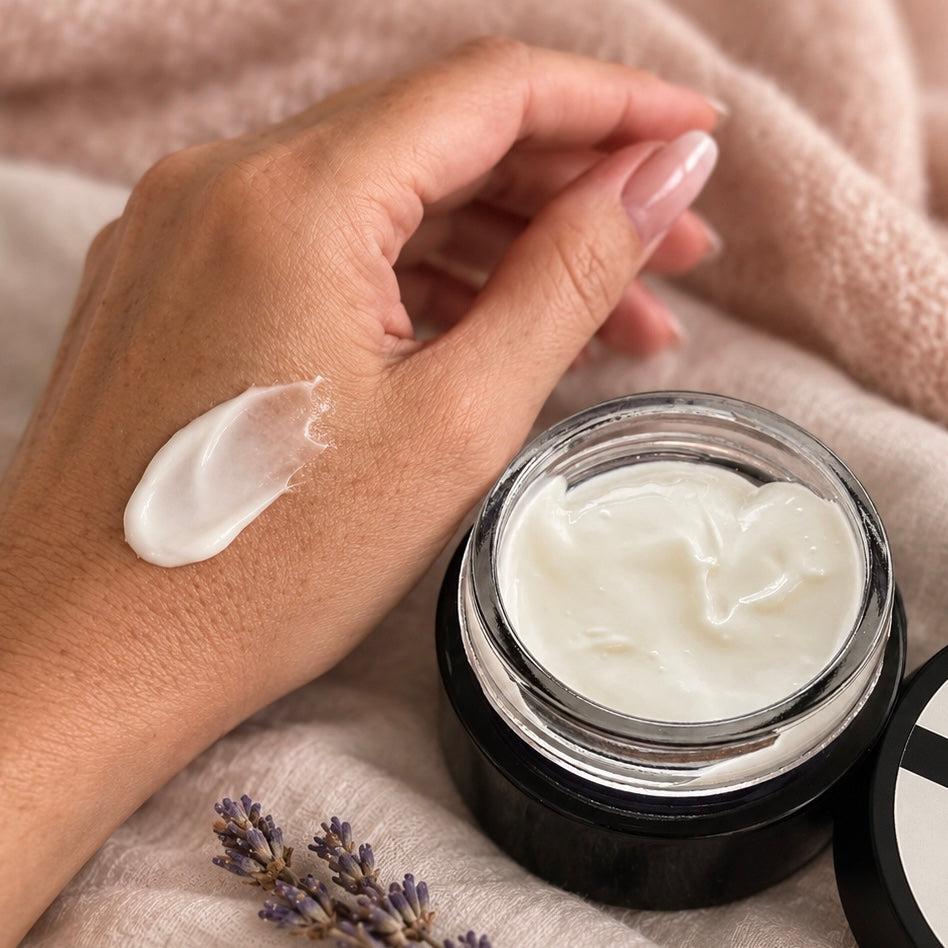
Our own Whipped Tallow Face Cream is light, airy and genuinely whipped, like a cream rather than a dense balm. It melts on contact with the skin, absorbs without leaving a greasy film, and wears comfortably under makeup or on its own. You get the full benefit of tallow's skin-loving fatty acids, plus naturally occurring vitamins A, D, E and K.
How to use a beef tallow moisturiser for face and body
Scoop a small amount (pea-sized for the face, more generous for the body). Press and smooth it onto clean, slightly damp skin. Damp skin helps the cream seal in moisture more effectively than applying to a completely dry surface. Allow a minute or two for absorption before layering clothing or other products over it.
A final word on choosing well
A beef tallow moisturiser is a genuinely lovely product for the right person, used the right way. Dry, mature and reactive skin types have the most to gain; acne-prone skin needs real care. The science backs tallow as an effective emollient, not a cure for inflammatory skin conditions, and any brand promising otherwise deserves your healthy scepticism.
If you're searching for a tallow moisturiser in Australia and want something locally made with traditional preparation, our Whipped Tallow Cream is worth a closer look.
Start slowly, patch test properly, and pay attention to how your skin responds over the first few weeks. Skin is wonderfully individual, and the only reliable way to know whether a beef tallow moisturiser is the right fit for you is a measured, gentle introduction.